Tuesday, June 14, 2022

ABAC by: Mrs. H


Day 9, last stop of the day was Abraham Baldwin Agricultural College  (ABAC).

Hi, I’m Mrs. Hernandez one of the Agriculture Teachers at Riverview High School. It was very exciting to take the students to ABAC as this is a school I went to and received my Associates degree before transferring to the University of Florida.

ABAC is a 4-year state college that offers 12 different bachelor’s degrees with varying specializations, 4 Associate degrees and 10 minors. As a small school of about
4,000 students this college packs a big punch and lots of opportunities.

While at the school we got a tour of the campus grounds and got to see most of the teaching farms up close. The tour guides gave the students an overview of all the campus life activities to look forward to, rodeos, tractor and truck pulls, spring field days, movie nights, Clay shooting teams, and so much more. On top of all that this school has some of the nicest on campus dorms than any other college we have seen.


If that didn’t interest the students enough, they even have competitive sports, intramural sports, internships, and opportunities to study abroad. Finally, if a student comes from any neighboring states (FL, GA, and TN, SC, NC) they can apply for a Neighbor waiver and receive in-state tuition.

This is one of the many colleges stops we had but I fell it stood on its own pedestal on size, opportunities, and price.


Ever heard of Agritourism? by: Kieran

 Good day everyone and welcome back,


The 2022  Riverview High School Summer Agriculture Tour has sadly come to an end. We all have explored new horizons, made memories with friends, and been enlightened about various potential career opportunities. The agriculture industry, like most others, is not perfect but will always have demand - we need food to survive! Farmers traditionally profit from their product through selling locally or commercially. Another growing option for farmers is agritourism. According to the USDA (United States Department of Agriculture), Agritourism is defined as, "a form of commercial enterprise that links agricultural production and/or processing with tourism in order to attract visitors onto a farm, ranch, or other agricultural business for the purposes of entertaining and/or educating the visitors and generating income for the farm, ranch, or business owner.”


During this year's agriculture tour, we have visited some destinations that rely on agritourism as a source of income. At Red White and Blue Farms, they grow sunflowers, blueberries, and strawberries. They always do “you pick” events throughout each year depending on what time of the year the season is for a certain crop. The “you pick” event is when farmers have tourists pay a certain fee to give those tourists the advantage to harvest the crop themselves. Farms that only sell their crop through agritourism is benefiting  both their business and the consumer because the consumer is educated on where the food is coming from (how it’s grown, how it’s harvested, etc…)  and the business knows that the probability of their product being wasted  is less than commercially selling it because at the end of the day, they know the product being sold directly to the consumer. It’s a win-win for both the consumer and the farmer!


This is Kieran checking out from the Ag Tour 2022 blog and I’ll see you in the next ag tour blog.


Monday, June 13, 2022

Better Fresh Farms by: Ms. Miranda

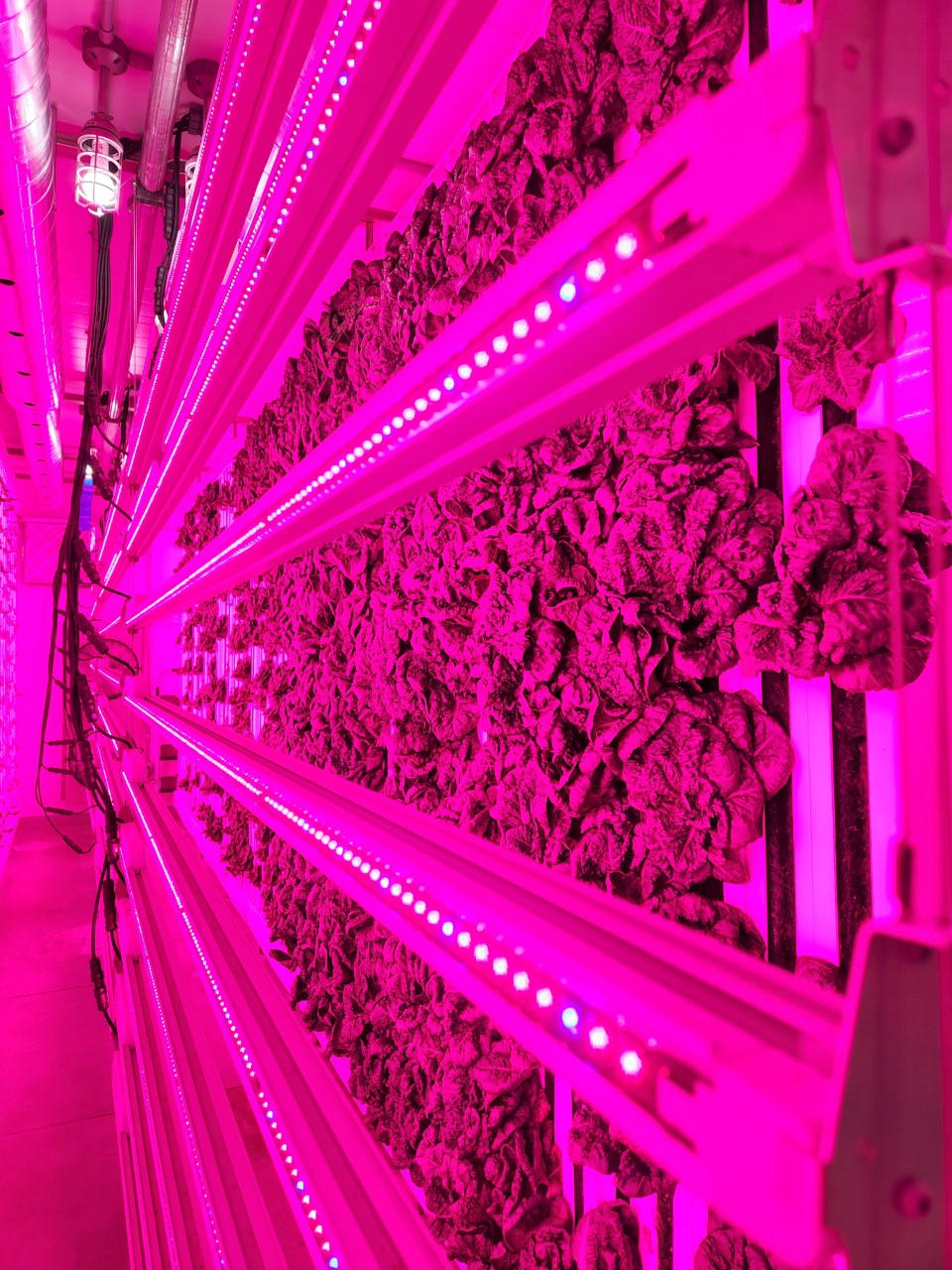
   Better Fresh Farms is a hydroponic farm that uses shipping containers to grow produce. This farm was created because of a need that Grant Anderson saw in his community. Grant saw that while living in a highly agricultural area of Georgia that most commodities produced were not locally available and were lacking in fresh produce such as leafy greens. From this need he started a hydroponic farm that is able to supply local fresh produce year-round to his community.

During the tour we were able to walk through the different shipping containers and see how they have improved and evolved over the years. He was able to share what had worked and not worked for them over the years and how they were able to adapt. It was great for the students to be able to see how setbacks were not always a failure but an opportunity to grow and improve.


Each of the containers we visited had a different set up and grew different kinds of produce. One container had a long flat bed that grew tomatoes. Another container had vertical trays that grew kale and that was held in by plastic fibers keeping the plant in place and still allowing the flow of water. The last container had horizontal rows of trays that grew lettuce and was the most preferred method of hydroponics by the Better Fresh Farms.


Sunday, June 12, 2022

UF Horse Teaching Unit by: Anais

Today we visited the University of Florida Horse Teaching Unit at UF. Dr. TenBroeck talked to us about the facility, what it provides the students, and its history. Some of its history is that it was previously a Saddlebred horse facility. There was a large range of horse breeds from Quarter Horse to Thoroughbred to Arabians. Now they only use pure breed Quarter Horses and Appendix. The disciplines are mainly western, focusing on ranch riding.


 At the HTU they breed all their own horses which helps teach students about reproduction, AI and how to deliver and care for foals. Once the foals are born, a student gets assigned one horse and will be with it until the sale when the horses are 2 years old. They learn basic foal and mother care, how to start foals to be ready in the yearling classes, and more. Once they're yearlings the students work on desensitization, ground work, manners, and obstacles. Once the horses hit 2 years old they will start establishing principles through the saddle. In the fall they will be saddled for the first time, being worked 3 times a week. During this period all work is still being done in the round pen for safety and efficiency. When spring comes the horses will have had at least 4 months under saddle and will have their first few rides. During spring the students put the horse through courses under saddle preparing them for the soon to be sale!


As we toured the facility we also learned that students can live on the grounds in exchange for working there. This is an excellent opportunity to build your resume and gain skills needed to work in the industry. 


Honeybees by: Ashley

UF Honey Bee Research Lab 

On our final day of our tour, the first stop was at the Honey Bee Research Lab at UF. The building was beautiful and it was incredible to see what students learn about honey bees! The program was strong but in 2014 there was a fight to improve and expand the bee research center. With support from the school and a generous donation of $250,000 from one beekeeper they were able to significantly improve their facility. There are several classes on beekeeping offered at UF. Some of these include beekeeping and business in beekeeping.


Some things I learned in the unit were that there are between 9-12 species of honey bees in the world. They were brought to the US in the 1600’s and were not native here. The behavior of honey bees is extremely hard to study because of how observation is done. It has to be done so up close that it doesn’t allow bees to act as if they were alone, they often become on high alert as to protect their hives. 


Bees cannot see the color red, so the best way to observe them is with a red light. They only see pitch black which is what it’s like for them in their bee hive. The area is also very hot as to not make the bees use all of their energy to regulate their temperature. The room is kept at about 90-95 degrees. The biggest threat known to bees is Varroa Destructor. It is a mite that takes over the bee hives.


Part of the lab has a processing room with a variety of honey extractors that are used with different size apiaries.


There are over 300 honey bee hives at the UF research center. They have a specific research area  with other hives to be able to observe and research more about the bees. These hives require modification occasionally so often times students that have classes in the research center will have to learn other skills such as welding.


We were able to participate in a hive demonstration. All suited up (I'm the on in pink!) Mr. Chris showed us a  hive, pointing out what was happening in that hive. 


The production of honey depends on the bees environment. In the best conditions, bees can produce 200 pounds of honey in a few weeks! The queen of the hive is the most important aspect, and she lays eggs 10x smaller than a grain of rice. If the queen dies, a new queen or female bee will be selected at random. It’s so cool to know that UF offers a lot more than expected!


LTF Greenhouse by: Arianna

This is day 9 of Riverview High School's summer ag tour and on the third stop of the day we visited the LTF Greenhouse in Tifton, Ga. Which is also know as the largest plant greenhouse in the southeast!


As we toured this facility we were shown essentially the 5 step process from where the plants are grown to harvested, packed and shipped out. Plus everything in between of course. As mentioned earlier this was the largest greenhouse in the southeast, they have over 81 greenhouses. This facility harvests over 7 different products from watermelon to peppers and even cantaloupe!


This specific greenhouse depends solely on their workers know as the “H2A” workers and without them this would not exist, considering everything is HAND harvested you could imagine how much work they put in to providing you a top tier product.

When the product is complete and done in packaging they are brought into these super big coolers where they stay there for no longer then 48 hours. Fruits and vegies actually have a really short shelf life if not stored correctly. I learned that cucumbers actually have this edible wax that is put on them which makes them look shiny and essentially more appealing to the consumers. Although it doesn’t sound to great it’s actually been done for a super long time.


I really enjoyed this stop and being able to see exactly where this food came from and being washed and packed.

MSU Agricultural and Biological Engineering by Mrs. H

Ms. Taylor Campbell set up several stops for us to learn more about a few of the departments at Mississippi State University.  

One stop made at Mississippi State University was the Department of Agricultural and Biological Engineering.  We were greeted by Dr. Daniel Chesser and Dr. Wes Lowe. They talked about the various careers that you could go in to in this field and how students in this department are working on research to help improve equipment to help the farmers. The research that is being done is helping to figure out what the truth is.


They showed us a few of their projects. The first was an autonomous boat that is solar powered. This will be sent out to run quality tests in different environments. The technology on this boat was unbelievable. They also showed us a planter that has sensors used to control planting depth and width which helps in the accuracy of planting seeds. This technology can help decrease the time in the field, which saves the farmers money. The kids also got to sit in the cab of the tractor to see the technology that is available in today's modern tractors.


They also shared some down to earth conversations to help the students understand the importance of not giving up and setting high standards to achieve your goals. And that it is okay for your goals to change.


Until Next Year

  This is the final entry for Summer Ag Tour 2022. Look for next year's blog as we travel to Illinois, Iowa, Wisconsin and Minnesota. Sp...